Garden design and build in Chessington
If you are looking for Garden design and build in Chessington, you are probably ready to turn an outdoor space into something more practical, more attractive, and easier to enjoy day to day. Whether you have a compact family garden, a larger plot that needs reshaping, or a tired outdoor area that has not been used properly for years, a well-planned design and build service can make a real difference. In Chessington, where homes range from post-war semis and terraces to newer developments and properties close to green corridors, every garden has its own opportunities and its own challenges.
A local garden design and build service brings together creative planning and skilled construction so the whole process feels joined up from start to finish. That matters if you want a space that is not only beautiful, but also usable in real life: somewhere for entertaining, somewhere for children to play, somewhere low maintenance, or somewhere that adds structure and value to a property. From paving and planting to retaining walls, turfing, lighting, and timber features, the right approach should be tailored to your home, your lifestyle, and the way the garden sits with the house.
In Chessington and the surrounding areas, practical details matter too. Access can be tight, parking may be limited on residential roads, and many gardens sit behind side gates or through narrow passages. A local team understands how to plan around these issues, protect nearby surfaces, and keep the work moving efficiently. If you are comparing options for a garden redesign, a full landscaping project, or a smaller transformation with stronger structure, this page explains what a professional service can include and how to decide what is right for you.
Why choose garden design and build for your Chessington property?

Choosing a garden design and build service means you are not just hiring someone to lay a patio or plant a few shrubs. You are choosing a process that starts with how you want to use the garden and ends with a finished outdoor space that works from season to season. In Chessington, that might mean creating a family-friendly lawn that is easy to maintain, a sociable dining area for summer evenings, or a smart front garden that improves the entrance to your home without making maintenance harder.
One of the biggest benefits is consistency. When the design and construction are handled together, the layout can be planned around levels, drainage, sunlight, privacy, and circulation before any digging starts. That reduces the chance of costly changes later on. It also makes it easier to choose materials that suit the property style and the local surroundings, whether you live near Chessington North, closer to Chessington South, or in an area where gardens back onto mature trees and existing boundary planting.
There is also the practical side. Garden design and build in Chessington is often about solving everyday problems as much as creating visual impact. Sloping lawns, tired decking, muddy corners, poor drainage, and awkward layouts can all limit how a garden is used. A considered design can improve all of these issues, helping you get more from the space without losing the character that makes it yours.
What makes a local team useful?
Local experience is more than convenience. It helps with understanding typical property layouts, local access conditions, and the kinds of materials that work well in the area. It also means the team is more likely to be familiar with narrow driveways, shared boundaries, and the need to keep disruption to neighbours to a minimum during construction.
What is included in a garden design and build service?

Every project is different, but a full garden design and build service usually combines planning, preparation, hard landscaping, soft landscaping, and finishing details. That can begin with an initial conversation about how you want the space to feel and function. From there, the layout is developed around your priorities, your budget, and the physical conditions of the site. In Chessington, this often means balancing family use, storage needs, privacy, and low-maintenance planting with the realities of the plot.
Typical elements may include new patios, paths, lawns, raised beds, sleeper borders, fencing, pergolas, seating areas, planting schemes, and lighting. Some projects also involve drainage improvements, steps, retaining walls, and new access routes. For larger gardens, there may be space to create separate zones: one for dining, one for children’s play, one for planting, and one for quiet relaxation. In smaller gardens, the goal is often to make the whole area feel larger and more usable through smarter planning and careful material choices.
A good service should also consider long-term maintenance. Some customers want a garden that looks structured all year round with minimal upkeep, while others want more planting and seasonal interest. Either way, the build should suit the design rather than leaving you with features that are attractive on day one but difficult to live with afterwards. The best projects feel cohesive, with each element working together rather than appearing added on.
Common features that can be included
- Patios and paving for dining, entertaining, or relaxed seating
- Decking for level changes or warmer visual texture
- Turfing and lawn renovation for family use and open space
- Planting design with shrubs, perennials, climbers, and seasonal interest
- Fencing and screening to improve privacy and security
- Raised beds and borders for structure and easier planting access
- Lighting to extend use into the evening and improve safety
- Paths, steps, and edging to create clear movement through the garden
How the process usually works

People often want to know what happens first and how a garden project moves from ideas to completion. A reliable garden design and build in Chessington service should make the process clear from the start. That usually begins with an initial discussion about your garden, your goals, and the issues you want to solve. You might already know that you want a patio and some planting, or you may only know that the space feels underused and needs a complete rethink.
Next comes a site visit and assessment. This is where the shape of the garden, levels, access, existing structures, drainage, and boundary conditions are reviewed. In Chessington, the practicalities of getting materials into the garden and moving waste out again may also be considered at this stage. That matters because a beautiful plan still needs to be built efficiently and safely. If the access is awkward, the team should plan for it early so the work can continue without avoidable delays.
After that, the design phase translates ideas into a workable layout. This does not always need to be overly formal. For some gardens, a sketch plan and material discussion may be enough. For larger or more complex spaces, a more detailed layout can help make the final outcome clearer. Once the design is agreed, the build stage can start. This may involve clearing the site, preparing the ground, installing any required drainage, building hard landscaping features, and then adding planting and finishing touches. A final walkthrough helps ensure the result is aligned with what was discussed.
What you can expect at each stage
- Initial consultation to discuss ideas, needs, and priorities
- Site assessment covering access, levels, drainage, and existing features
- Design development to shape a practical and attractive layout
- Material selection for surfaces, borders, planting, and structures
- Construction of the agreed hard and soft landscaping elements
- Finishing including planting, clean-up, and final detail work
Design ideas that work well in Chessington gardens
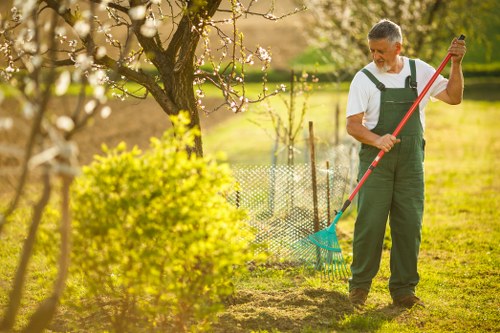
Chessington has a mix of garden sizes and styles, so there is no single formula that fits every property. Some homes benefit from a simple, durable redesign that makes the most of a modest footprint. Others can take a more layered approach, with different zones and feature elements. The key is to use the available space well and to choose features that suit both the property and the way you actually live.
For smaller gardens, strong layout lines can make the space feel more generous. Large slabs, slim borders, carefully positioned planting, and built-in seating can reduce visual clutter. In family gardens, a lawn area may still be important, but it can be framed by patio sections and durable edging so the whole garden stays tidy and easy to navigate. In homes where outdoor dining is a priority, a sheltered patio close to the house can be more useful than a large but poorly placed open area.
In properties with more room, the opportunity may be to create distinct sections. A well designed garden can include a formal or relaxed entertaining area, a lawn, a shaded corner, borders that attract pollinators, and perhaps a discreet utility zone for bins, storage, or composting. For front gardens, the emphasis is often on kerb appeal, access, and practicality. A well-planned entrance can improve the feel of a home immediately, especially if the existing area is overgrown, cracked, or awkward to use.
Popular local priorities
- Low-maintenance finishes for busy households
- Family-friendly lawns with durable surfacing
- Private seating areas for relaxing outdoors
- Improved drainage where puddling or soft ground is a problem
- Planting with year-round interest rather than only summer colour
- Safer access and better lighting for front and back gardens
Preparing for your garden project

If you are planning a garden makeover, a little preparation helps the project run more smoothly. You do not need to have every detail decided before speaking to a local team, but it helps to think about how the space is used now and what is not working. Maybe the lawn turns muddy in winter, maybe the patio is too small for family meals, or maybe the garden lacks privacy from neighbouring homes. These are all useful starting points.
It is also helpful to consider access. In Chessington, many residential gardens are reached through side passages, shared pathways, or narrow gates, so it is worth noting whether wheelbarrow access is straightforward or whether materials will need to be carried through the house or a garage. Parking is another practical point. A local team will normally plan around the available space, but being upfront about driveways, permit concerns, or restricted roads can help avoid complications on the first day of work.
Before the build begins, some customers choose to clear personal items, move pots, and cut back any plants they want to keep. Others prefer the team to handle most of the clearance. Either way, it helps to identify anything that should be retained, such as mature shrubs, garden furniture, ornaments, or trees. A clear brief allows the project to progress with fewer surprises and makes it easier to protect items that matter to you.
Simple preparation checklist
- Decide how you want to use the garden most often
- Note any problem areas such as damp patches, shade, or poor privacy
- Think about what should stay and what can be removed
- Check access points, gate widths, and parking limitations
- Share any preferences for materials, planting style, or maintenance level
- Plan around family routines, pets, or business use if the property is not purely residential
Why a local company matters in Chessington
Working with a local landscaping team can make the whole experience easier. When the crew knows the area, they are more likely to understand the layout of local streets, the kinds of properties common in Chessington, and the practical issues that come with working in suburban gardens. That can be especially helpful on projects where deliveries need careful timing or where the garden layout is constrained by fences, outbuildings, or neighbouring boundaries.
Local knowledge also helps with material selection. Not every surface, planting choice, or structural feature suits every setting. A team that regularly works in and around Chessington is more likely to advise on finishes that are appropriate for local conditions and realistic for the way the garden will be used. This matters for both private homes and commercial premises. For example, a business with outdoor space may need a smart, durable, low-maintenance finish that stays presentable and manageable through the year.
Another reason to choose local support is communication. When you are spending time and money on a garden improvement, you want the process to feel straightforward. A nearby team is easier to keep in touch with, easier to brief on site, and more likely to respond quickly if questions arise during the project. That kind of practical support is valuable whether you are planning a full redesign or a smaller upgrade to make the space work better.
Suitable for residential and commercial customers
Garden design and build in Chessington is not just for private homes. It can also suit offices, hospitality spaces, care environments, communal grounds, and other commercial properties that need an outdoor area to look organised and welcoming. The right design can improve first impressions, increase usable outdoor space, and reduce upkeep. For homes, the value may be in family life, entertaining, and ease of maintenance. For businesses, the focus may be on appearance, safety, and practicality.
Materials and finishes to consider
Choosing materials is one of the most important parts of any garden design. The right surfaces and structures can completely change how a space feels. In Chessington, many homeowners want a finish that looks smart without becoming difficult to maintain. That might mean porcelain paving for a sleek modern look, natural stone for a softer traditional style, or a mix of materials that creates contrast and texture. Timber or composite elements can add warmth, while brick or rendered features can help tie the garden to the home’s exterior.
It is also worth thinking about how materials age. Some finishes need more upkeep than others, and some are better suited to heavy use. A family garden might need robust paving and good-quality turf, while a calm seating garden may benefit from more planting and decorative surfaces. The best choice depends on your priorities, not just on appearance. A local designer and builder should help you balance style, durability, and practical maintenance so that the garden remains enjoyable after the initial work is complete.
Planting matters just as much as hard landscaping. Well-chosen plants can soften edges, provide privacy, attract wildlife, and create structure through the seasons. In many Chessington gardens, planting plans need to account for shade, boundary conditions, and the amount of time available for upkeep. A strong design will choose plants that suit the site rather than relying on short-lived display alone. That helps the garden feel settled and intentional from the outset.
Useful questions when choosing materials
- Will this surface suit the amount of foot traffic it will receive?
- Is the finish easy to keep clean and manageable?
- Does the style fit the property and surrounding garden features?
- How will the material look in wet weather and in winter light?
- Does it support the overall maintenance level I want?
Pricing factors and what affects the quote
When people ask about cost, the honest answer is that garden projects vary depending on scope, access, materials, and the condition of the site. Rather than fixed prices, it is more useful to understand what tends to influence a quote. In Chessington, a small redesign with straightforward access will generally be simpler to plan and deliver than a larger project involving drainage work, level changes, and multiple surface types. The more preparation and construction involved, the more time and materials the project is likely to require.
Factors that often affect price include the size of the garden, the amount of clearance needed, the type of paving or decking selected, whether retaining walls or steps are needed, and how complex the planting scheme is. Access can also matter because moving materials through narrow entrances or around restricted parking can increase the labour required. If an existing garden has to be fully stripped back before rebuilding begins, that will also influence the overall scope.
If you are comparing options, ask for a clear explanation of what is included. That should make it easier to understand the value of the service and to decide whether you want a phased project or a full transformation in one go. A sensible quote should reflect the work involved without cutting corners on the groundwork, because that is what helps the finished garden last.
What a useful quote should clarify
- The main elements included in the design and build
- Any assumptions about access, clearance, or disposal
- The proposed materials and any alternatives discussed
- Whether planting, lighting, or finishing work is included
- The expected sequence of work and likely duration
Request a free quote if you want a clearer picture of what your own garden could involve. That is often the best first step if you are considering a redesign but are not yet sure how far you want to go.
Areas covered around Chessington
A local service is well placed to support customers across Chessington and nearby neighbourhoods. That can include residential roads and estates near the town centre, homes around local parks and open spaces, and properties close to neighbouring parts of Surrey and southwest London. The benefit of working nearby is that the team can often respond more easily, plan site visits efficiently, and understand the practical conditions of local gardens.
Nearby areas commonly served may include Hook, Surbiton, Claygate, Oxshott, Hinchley Wood, Kingston upon Thames, and other surrounding locations depending on the project type and access. If your property sits near a boundary between residential areas, has limited parking, or is part of a row of homes with shared access, a local team can often plan the work more effectively than someone unfamiliar with the area.
Whether the job is a front garden refresh, a rear garden redesign, or a larger landscaping project for a commercial site, the local approach should remain the same: clear communication, practical planning, and a finish that suits the space.
Frequently asked questions
Do I need a full design before work starts?
Not always. Some smaller projects can be planned with a simpler layout discussion, while larger or more complex gardens benefit from a clearer design before building begins. The right approach depends on the scale of the work and how many elements need to fit together.
Can you work with a small garden?
Yes. Small gardens often benefit most from thoughtful design because every metre matters. Good layout, proportion, and material choices can make compact spaces feel more usable and less cluttered.
What if my garden has poor drainage?
Drainage problems should be addressed early. Depending on the cause, the solution may involve regrading, drainage channels, improved sub-base preparation, or adjusting the way surfaces are laid. It is better to deal with these issues as part of the build than to add features on top of a problem surface.
Can I keep mature plants or trees?
Often, yes. If existing planting is healthy and fits the new layout, it may be possible to retain it. It is helpful to identify anything you want to keep during the initial site visit so the design can work around it.
How disruptive is the work?
That depends on the size of the project. Most garden design and build work involves some noise, material movement, and temporary access restrictions. A local team should plan the sequence carefully and keep disruption to a reasonable level wherever possible.
Do you only work on homes?
No. Many local teams also support commercial customers, communal spaces, and other outdoor areas that need improved structure, presentation, or maintenance. The design approach may differ, but the goal is always to create a space that works well in practice.
Ready to improve your outdoor space?
If your garden in Chessington feels underused, hard to maintain, or simply not in step with the way you live, a well-planned redesign could make a real difference. A professional garden design and build in Chessington service can help you move from a rough idea to a finished space that feels practical, attractive, and suited to your property. From paving and planting to structural features and complete layout changes, the key is to create a garden that works for your day-to-day life.
Whether you are planning a family-friendly rear garden, a tidy front garden, a low-maintenance layout, or a more ambitious transformation, it is worth speaking to a local team early. That gives you the chance to explore options, understand the build process, and make informed choices about materials and features. Contact us today to discuss your plans, or book your service now if you are ready to move forward with a quote.
With the right design and a careful build, your outdoor space can become one of the most useful parts of your home or premises. Start with a conversation, and build from there.