Health and Safety Policy for Landscaping Chessington
 This Health and Safety Policy sets out the standards and responsibilities that support safe, well-managed landscaping in Chessington. Our aim is to protect employees, contractors, clients, visitors, and members of the public from harm while work is planned and delivered. We recognise that landscaping activities can involve tools, machinery, manual handling, working outdoors, and changing ground conditions, so careful control measures are essential from start to finish.
All work is carried out with a commitment to preventing injury and ill health through sensible planning, training, supervision, and ongoing monitoring. We expect every person involved in a project to take responsibility for safe behaviour, report concerns promptly, and follow established procedures. This policy applies to garden maintenance, planting, turfing, hard landscaping, clearance work, and other related tasks associated with landscaping services.
 Management will ensure that hazards are assessed before work begins, with attention given to the type of task, the site layout, weather conditions, and the presence of hidden risks such as unstable surfaces, sharp objects, or overhead obstacles. Where necessary, work methods will be adjusted to reduce risk, and suitable protective equipment will be provided and used correctly. A proactive approach helps us maintain a safe environment for everyone involved in landscape maintenance.
Risk assessment is a core part of our approach. Each job will be reviewed to identify possible dangers, including slips, trips, falls, noise, vibration, dust, contact with plants, and the safe use of chemicals. We will choose control measures that are appropriate and proportionate to the task, and these measures will be reviewed whenever conditions change. Special care is taken when working around children, pets, the public, or occupied properties.
Employees and subcontractors are expected to use equipment only when competent to do so. Machinery must be checked before use, maintained in good condition, and operated in line with manufacturer instructions. Guards, emergency stops, and other safety features must never be bypassed. Landscaping health and safety also depends on correct manual handling techniques, so lifting, pushing, and carrying tasks should be planned to avoid strain and repetitive injury.
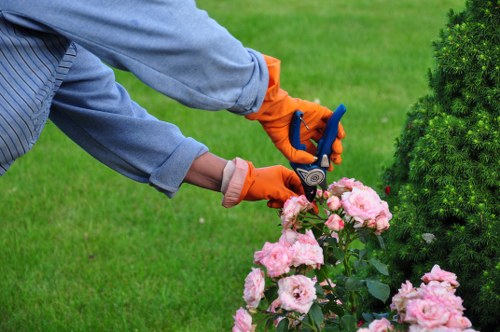
 Personal protective equipment will be selected according to the task and may include gloves, eye protection, safety footwear, hearing protection, high-visibility clothing, or respiratory protection. PPE is the last line of defence, not a replacement for safe working methods. It must be worn, fitted, cleaned, and stored properly. In addition, workers should remain alert to fatigue, dehydration, and exposure to sun or cold during outdoor work, especially when carrying out landscaping operations over long periods.
We also recognise the importance of environmental and chemical safety. Fertilisers, fuels, solvents, and herbicides must be handled, labelled, stored, and disposed of responsibly. Spill kits and cleaning materials should be available where needed, and unsafe mixing or decanting must be avoided. Where plant protection products are used, the risk to people, animals, and surrounding areas must be kept as low as reasonably practicable. Safe storage and correct application support responsible landscaping practice.
Emergency arrangements will be maintained so that all workers know how to respond to accidents, fire, injury, severe weather, or discovery of hazardous items. First aid provisions will be suitable for the scale and nature of the work, and incidents must be recorded and investigated to prevent recurrence. Accident reporting is not simply a formality; it is a vital part of improving standards and identifying patterns that require action.
 Training, instruction, and supervision are key elements of our policy. New staff and temporary workers will receive a clear introduction to site rules, safe systems of work, equipment use, and reporting procedures. Refresher training will be provided when needed, particularly where new machinery, materials, or work methods are introduced. Supervisors will monitor standards and intervene where unsafe behaviour, poor housekeeping, or weak communication could create risk in garden and landscaping work.
Good housekeeping is essential for preventing accidents. Work areas should be kept tidy, access routes maintained, waste removed promptly, and materials stacked securely. Tools should not be left where they can cause trips or be damaged. If a task requires barriers, signage, or restricted access, these controls must be in place before work starts and remain effective throughout the job. Such discipline supports safer landscaping services and better outcomes for clients.
We expect everyone to stop work if they believe conditions are unsafe. No deadline or commercial pressure should override the duty to work safely. Weather changes, poor visibility, damaged equipment, or unexpected site conditions may require a pause, reassessment, or rescheduling. This is especially important when using power tools, handling heavy materials, or operating near roads, boundaries, or occupied spaces where landscaping hazards can quickly increase.
 This policy will be reviewed regularly to ensure it remains effective, practical, and aligned with the needs of the business. Updates may be made after incidents, changes in legislation, new equipment purchases, or changes in working methods. Everyone has a role in supporting a safe culture by following instructions, speaking up early, and working with care. Through consistent standards and shared responsibility, landscaping health and safety can be maintained to a high level.